EU tightens building efficiency: Why intelligent lighting is now a must-have
- Press
EU strengthens building efficiency: Why intelligent lighting is now a must-have Short teaser: The EU has adopted the building directive…

Under high voltage: In 2022, energy prices reached a record high. For this reason, the German federal government initiated a Electricity price brake One measure that expired on December 31, 2023. Compared to the previous year, this measure was able to temporarily lower energy prices, but electricity costs are still higher in 2024 than in the years before 2022.
This is a serious factor especially for the industrial sector, which needs a large amount of energy daily for its machines and processes.
Economic growth drastically increases electricity consumption
Although rising energy prices have already managed to convince some companies to use their energy more efficiently, as of 2023 many companies are still passing up savings opportunities through inefficient pump, ventilation, compressed air and lighting systems.
Additional Factors For the high end consumer segment, this is due to continuous economic growth and increased consumption in recent years. This is not least due to the boom in e-commerce. Thus, despite the use of advanced solutions, energy consumption remains unchanged since 1990 at the same level.
Energy efficiency law: Energy consumption must decrease
As early as 2010, the German government saw the need for action and implemented it. Energy concept for an environmentally friendly, reliable and affordable energy supply one.
The goal: The energy productivity is to increase by 2.1 percent every year by 2050. However, this guideline has not been met so far.
Given the increasing environmental burden, the government therefore launched the Energy Efficiency Act In 2023, a new attempt to reduce energy consumption will be made.
But what does this mean for companies in industry, production and logistics? In addition to a periodic energy audit, they will in future be required to make their energy efficiency and the associated implementation plans transparently available and to have them audited.
Saved potential in lighting
Up to 9 billion kilowatt-hours The potential for savings is lost through outdated lighting systems – and with that, a lot of money.
According to the Federal Environment Agency, companies prefer to use their budget for their core business and, due to a lack of information, doubt the return on investment (ROI) of future energy efficiency measures.
Therefore, until recently, many companies still used outdated fluorescent tubes. It was only after an update of the RoHS Directive In August 2023, the European Parliament forced the industry to upgrade.
As a result, some companies have recognized the trend and are gradually equipping their warehouses and production facilities with sustainable LED lights. However, so far, on average only just over 30 percent of companies between 26 and 50 percent Their overall lighting was adjusted.
However, the way the light is used in actual operation is also crucial for energy costs.
Motion sensor instead of continuous lighting
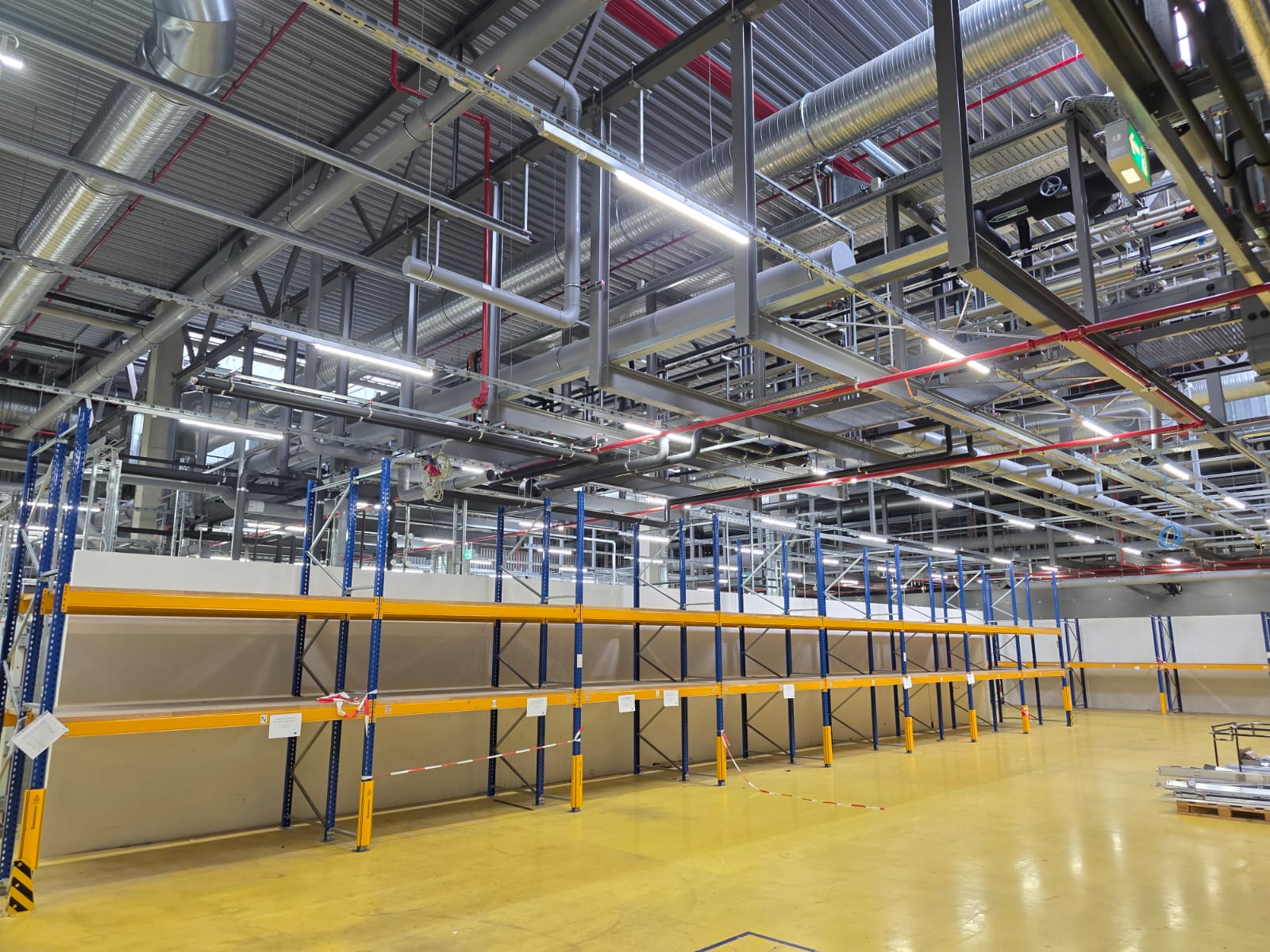
In a warehouse or production facility, the light switch quickly becomes an unused wall decoration. In actual operation, there is hardly any opportunity to turn off the lighting, especially when many employees are in the warehouse.
If pressing the light switch becomes a signal for the end of the workday, the constant continuous lighting ultimately reflects in the electricity costs.
An alternative is motion detectors that automatically turn the lights on and off depending on whether someone is active in the hall. The individual sensors often cover a wide area and turn the lights on when a detected movement is detected.
This has two significant drawbacks: First, storage systems and auxiliary devices can restrict the functionality of the sensors. As a result, a picker may suddenly be left in the dark, which not only slows down operation but also poses a safety risk – especially when handling bulky, heavy goods. At the same time, a conventional sensor solution switches on the entire lighting system. When many employees are active, the lights also come on continuously.
On the other hand, intelligent lighting systems are more sustainable and cost-effective, as they only turn on the light where it is actually needed.
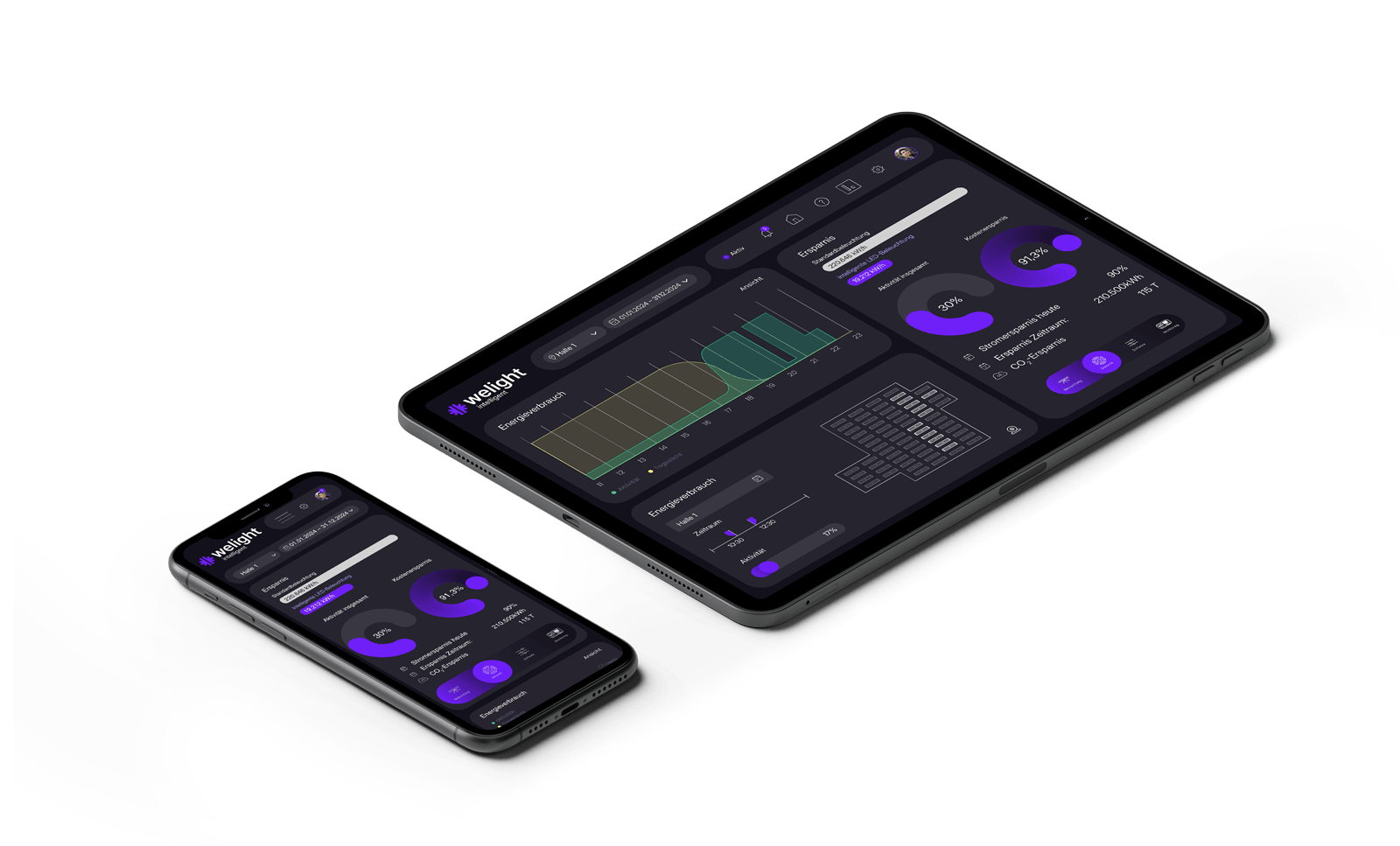
With welight intelligent, save up to 90% in energy costs
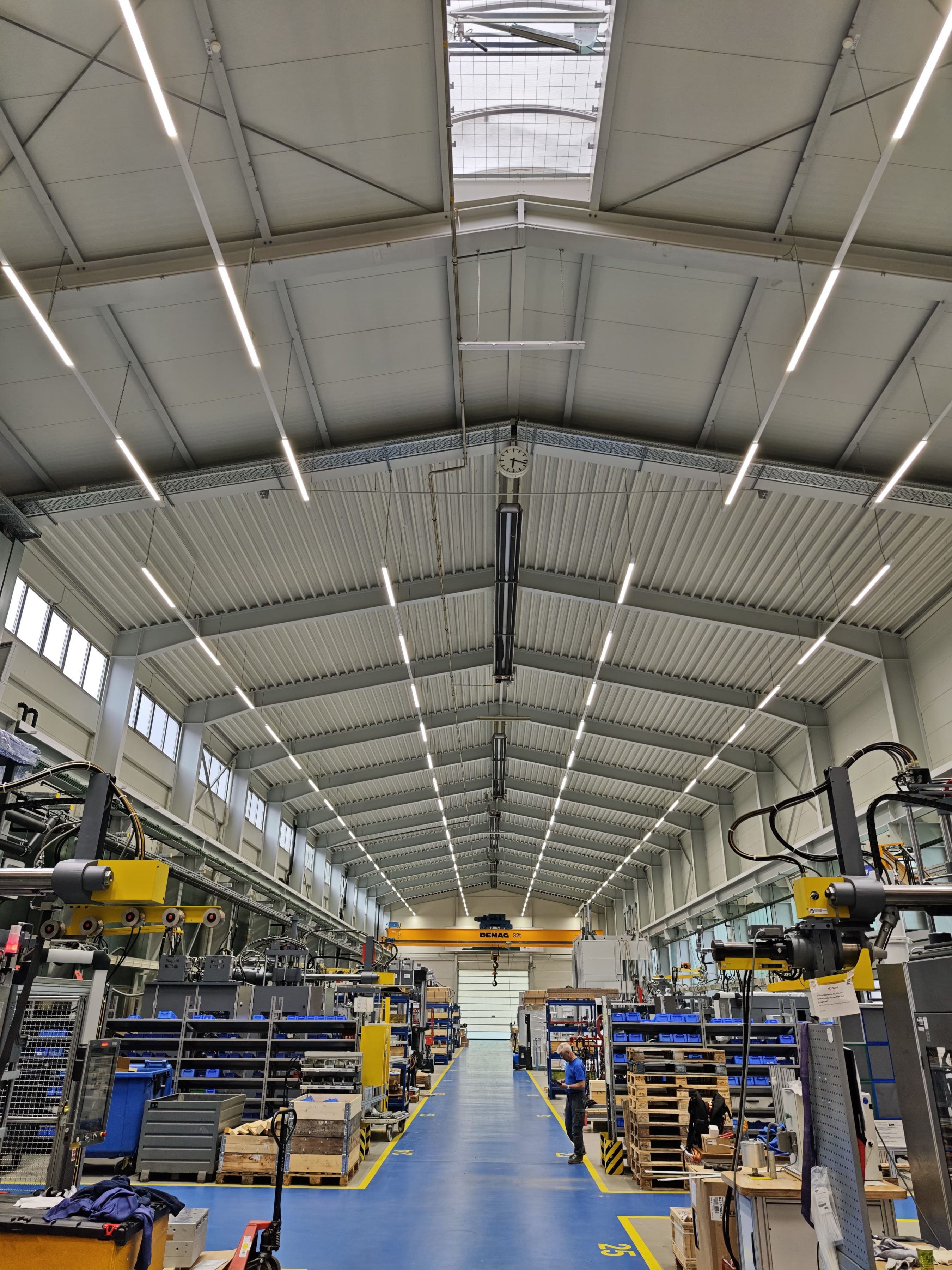
Instead of lighting the entire hall area with light at the slightest movement, welight intelligently opts for targeted intelligent lighting.
For this, each light is equipped with a sensor that detects the exact location of movement, so that the system can turn on the light exactly there. To achieve the required range, we rely on wireless communication between the controller and sensor. This means that the design of the warehouse plays no decisive role in the efficiency of the lighting system and it can be used without interruption even during modifications.
At the same time, individual lighting intensities and real-time control of the lighting systems via the controller are possible. Overall, our system not only ensures optimal lighting conditions, but also exceeds the requirements of EU directives. The best part: In optimal cases, companies save up to 90 percent in energy costs with the welight intelligent solution compared to conventional industrial lighting.
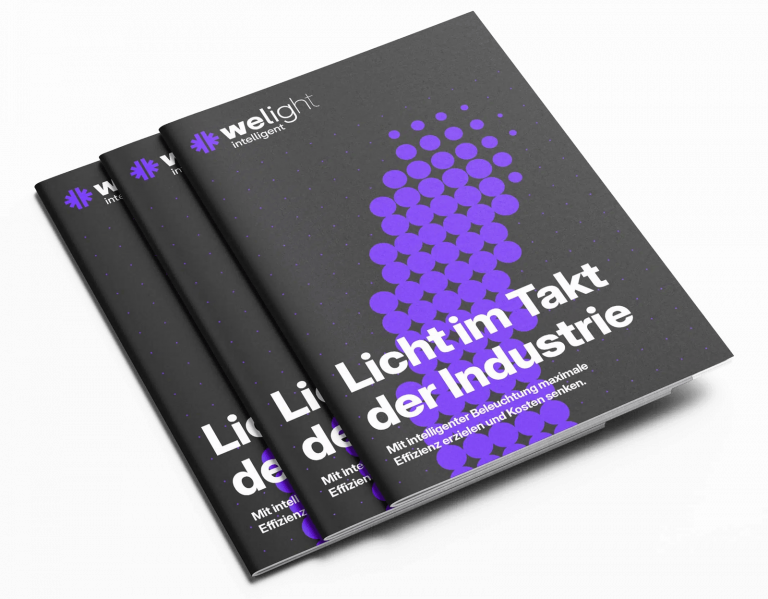
Would you like more information about our solution? Here we bring the functionality of our advanced lighting system into the spotlight: Smart sensors for your lighting – welight intelligent